
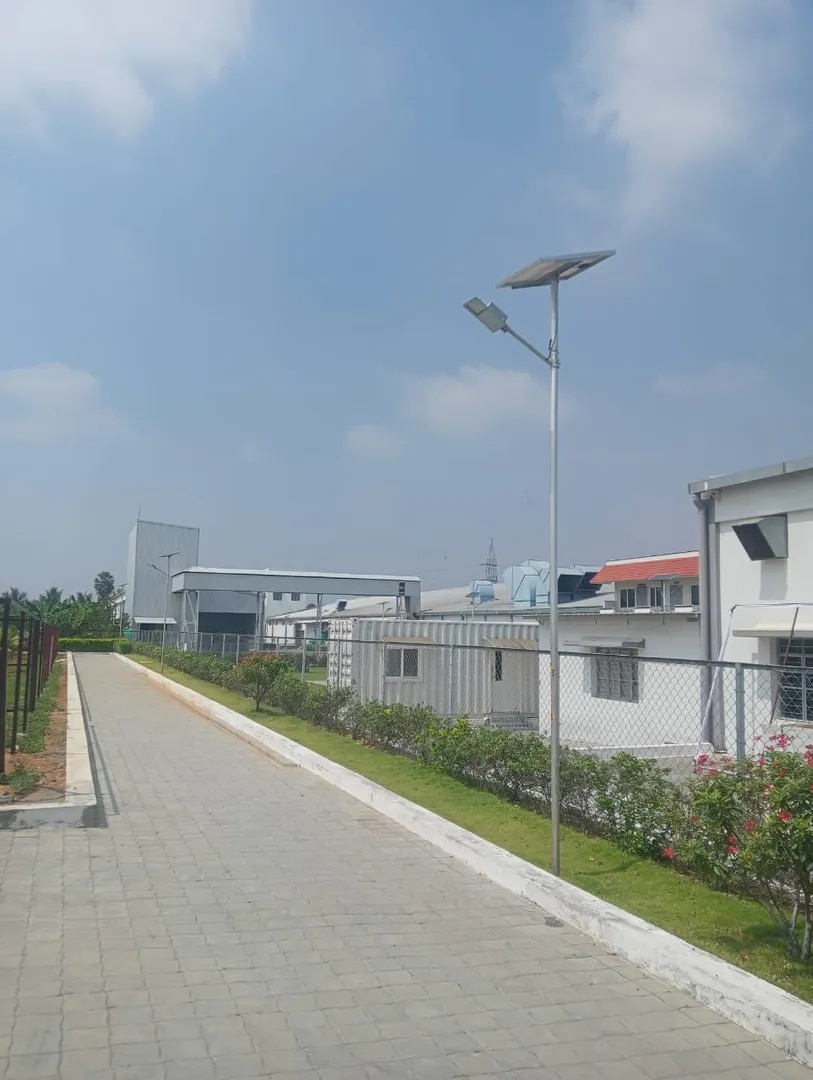
Solar Street Light
Description
Key Components & Their Functions
Solar Panel (PV Panel): Converts sunlight into electrical energy (Direct Current). Mono-crystalline panels are common for higher efficiency.
Rechargeable Battery: Stores energy during the day. Modern systems often use lithium-ion or LiFePO4 batteries due to their compact size, high capacity, and long life.
Charge Controller: A critical component that protects the battery by regulating the voltage and current, preventing overcharging or deep discharging.
LED Light Fixture: Provides illumination, usually equipped with sensors to activate automatically at dusk (dusk-to-dawn).
Pole & Fixture: Holds the components at a height for optimal sunlight and light distribution.
How Solar Street Lights Work
Daytime Charging: The PV panel absorbs sunlight, converting it to electrical energy, which the charge controller stores in the battery.
Nighttime Operation: The charge controller senses no voltage from the panel, triggering the battery to supply power to the LED lamp.
Automatic Control: Smart controllers can manage dimming and, if equipped, use motion sensors (PIR) to turn the light to 100% brightness only when movement is detected.
Main Types of Solar Street Lights
All-in-One / Integrated: The solar panel, battery, and controller are built into one unit, making installation easy.
Split System: The solar panel is separate from the light fixture and battery, suitable for higher power needs.
Key Benefits
Independence from Grid: They function without conventional electricity, reducing power bills.
Low Maintenance & Eco-Friendly: No hazardous external wiring, minimal maintenance, and renewable energy usage.
Smart Features: Modern lights have, according to Anern, “dusk to dawn” sensors, motion detection, and dimming options to save energy.
Typical Specifications
Voltage: Mostly operates on 3.2V, 11.1V, or 12.8V systems.
Battery Capacity: Directly affects backup days (working during cloudy days).
Installation: Usually mounted on poles 3–10 meters high.