Start by proving that the plant is underperforming, then separate low solar resource from array faults, inverter limits, grid restrictions, and bad data. By the end, you will have a safe inspection sequence, a measurement-based fault list, and a corrective-action brief that a qualified service team can act on.
Key takeaways
- Compare weather-adjusted yield before blaming panels or inverters.
- Use inverter, string, irradiance, and export data to isolate losses.
- Inspect shading, soiling, drainage, cables, earthing, and grid voltage.
- Give technicians a dated evidence pack with readings and fault history.
Prove the Loss Before You Blame the Equipment
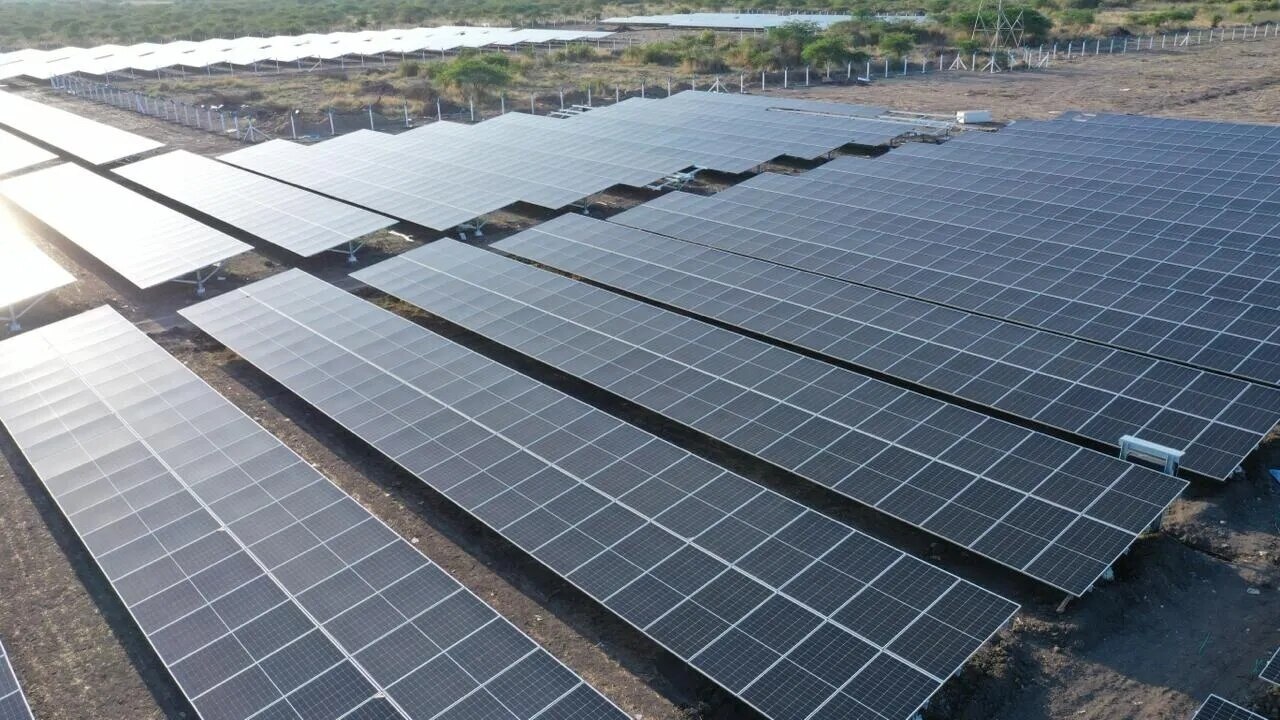
A ground-mounted plant is genuinely underperforming when its weather-adjusted production falls below its expected yield, not merely when the export meter shows fewer kilowatt-hours. For ground mounted solar, a plant underperforming in Coimbatore needs evidence that separates sunlight, conversion, availability, and grid delivery.
1. Record daily kWh, specific yield in kWh per kWp, performance ratio (PR), and inverter availability from the monitoring portal. Compare them with the same season’s history and the design estimate. Use plane-of-array (POA) irradiance, not sunshine hours or generic horizontal irradiance; a dirty or shaded sensor can create a false loss.
2. Reconcile inverter AC output with the plant controller, point-of-interconnection meter, and SCADA logs. A low export reading can result from a zero-export command, reactive-power control, voltage or frequency trips, feeder failure, transformer downtime, or utility curtailment while the array remains productive.
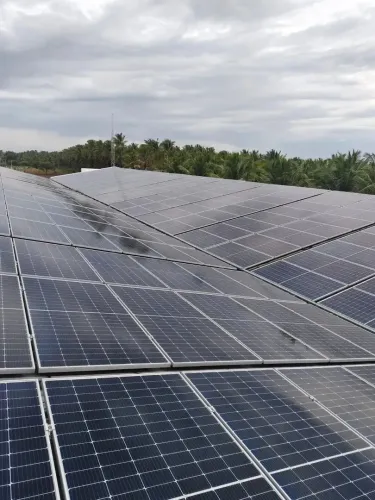
3. Separate irradiance, module-temperature, soiling, shading, mismatch, inverter conversion, clipping, availability, and grid-curtailment losses. For ground mounted solar troubleshooting in Coimbatore, test soiling with a clean reference module or soiling station; dust from roads, farms, construction, and unpaved tracks cannot be quantified by appearance alone.
If POA-adjusted PR and inverter output are low while grid records show normal operation, equipment or array inspection becomes justified. Do not approve replacement parts before this comparison.
Use the Monitoring Data to Locate the Loss
Compare plane-of-array irradiance with AC production, not peak-sun hours alone. For solar plant performance issues in Coimbatore, this separates weak sunlight from losses inside the plant. Calculate specific yield in kWh per kWp and performance ratio (PR), using the IEC 61724-1 framework, then compare both with the same season’s records.
Keep these records with synchronized timestamps:
- Irradiance, module temperature, ambient temperature, and soiling measurements
- Inverter AC output, availability, alarms, DC voltage, current, and string-level readings
- Plant-controller commands, including zero-export, active-power, and reactive-power limits
- Point-of-interconnection meter readings, SCADA logs, and utility outage or curtailment notices
- Cleaning dates and before-and-after production results
| Signal | Comparison | Likely location of loss |
|---|---|---|
| Low irradiance and proportionally low AC output | Current plane-of-array irradiance versus historical weather data | Sunlight or weather sensor |
| Normal irradiance but low PR | Clean reference module versus dirty module, plus string currents | Soiling, shading, mismatch, or array fault |
| Normal DC production but low inverter AC output | Inverter DC input versus AC conversion and event log | Inverter limit, trip, clipping, or conversion loss |
| Normal inverter AC output but low export meter energy | Inverter output versus plant controller and point-of-interconnection meter | Zero-export control, transformer or feeder outage, grid curtailment |
| Repeated zero output with no irradiance problem | Inverter availability and utility outage timestamps | Equipment trip or grid interruption |
Check whether clipping appears only near high irradiance. A sudden increase points to an incorrect AC limit, controller setting, or SCADA scaling error, not module degradation. Timestamp mismatches can turn a short outage or communications failure into a false PV-array diagnosis.
Inspect Coimbatore’s Site Conditions and Electrical Path
Ground solar plant problems in Coimbatore often start with dust, vegetation, drainage damage, or a changed electrical path rather than failed modules. Inspect the site after dry dusty periods, nearby road traffic, farming, construction, heavy rain, and high winds.
- Compare a clean reference module with a dirty module, or use a soiling station; visual inspection alone cannot quantify energy loss.
- Look for morning and afternoon row-to-row shadows, not only noon shadows. Remove weeds that shade modules, block bifacial rear surfaces, change ground reflectance, or obstruct drainage.
- Check for shifted rows, loose clamps, module movement, cable abrasion, crushed conduits, eroded foundations, and standing water.
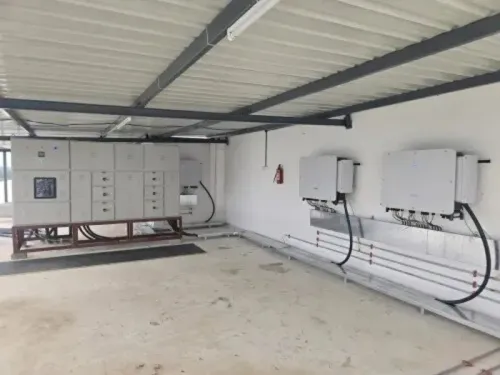
- Trace the electrical path from string connectors and combiner boxes through DC isolators, inverters, transformers, and the point-of-interconnection meter.
| Check | What to compare or inspect | Who should perform it |
|---|---|---|
| Soiling | Clean-versus-dirty reference output and irradiance | Site staff can clean; a technician should quantify loss |
| Structure | Approved row geometry, clamps, foundations, and cable support | Qualified structural or solar technician |
| DC circuit | Connector condition, polarity, continuity, and insulation resistance | Qualified electrical technician |
| Grid path | Inverter AC output, controller commands, POI meter, outage, and curtailment records | Qualified technician with utility coordination |
Do not bypass an insulation-resistance alarm. Wet cables, connector ingress, junction-box damage, or a fault to the mounting structure can cause it; testing must follow the inverter manufacturer’s voltage limits because an unsuitable megger test can damage electronics.
A qualified technician must perform live DC or AC measurements, insulation testing, protection checks, and structural verification against the approved design and Indian loading requirements.
Match Each Abnormal Reading to a Corrective Action
A low export reading does not prove a PV fault. Compare synchronized SCADA, inverter, irradiance, and utility-meter timestamps: inverter power with normal plane-of-array irradiance indicates array production, while zero export with active inverters points to grid outage, export limitation, or curtailment.
- Cleaning: compare a clean-versus-dirty reference module or soiling station, alongside a calibrated pyranometer. A large soiling ratio that improves after washing justifies cleaning; visual dust alone does not.
- Shading: use a shade-analysis camera or solar pathfinder, then inspect row shadows in the morning and afternoon. Remove vegetation or trim the obstruction when string output falls only during those periods.
- Module: use an I-V tracer and infrared camera. A low-power curve, hot cell, or bypass-diode hotspot identifies a module or substring fault; replace the affected module after confirming the result.
- Wiring: measure string open-circuit voltage, operating current, polarity, continuity, and insulation resistance with a multimeter and insulation tester. Unequal voltage or current indicates an open connector, reverse polarity, high-resistance joint, fuse, or damaged cable.
- Inverter: read event logs, DC input voltage, AC output, temperature, and availability. Repeated overtemperature, insulation, residual-current, or grid faults require a qualified technician; do not open live equipment.
- Grid: use the utility meter and a power-quality analyser to check voltage, frequency, phase imbalance, and outage timestamps. Correct the supply or export-control setting, not the modules.
For ground-mounted solar troubleshooting in Coimbatore, record the test instrument, timestamp, weather, and before-and-after result. Apply IEC 62446-1 documentation practices so a brief separates cleaning, shading, wiring, equipment, and grid losses.
Create a Repair Brief and Decide What Help You Need
A useful repair brief lets a service provider test a fault instead of guessing from a low export figure. State the affected dates, expected and actual kWh, specific yield, performance ratio, inverter availability, and whether the shortfall appears at array output or only at the point-of-interconnection meter.
1. Attach daily and 15-minute monitoring exports, inverter alarms, string-level readings, SCADA events, plant-controller commands, export-meter data, and utility outage or curtailment records.
2. Include plane-of-array irradiance, weather data, cleaning dates, vegetation photographs, and images showing row shading in the morning, at noon, and in the afternoon. Record nearby road dust, construction, agricultural activity, blocked drains, and weeds near bifacial modules.
3. Give the provider commissioning records under IEC 62446-1: polarity, open-circuit voltage, operating current, insulation resistance, earthing, protective-device, labelling, and functional-test results. Identify any missing test sheets or unexplained changes after maintenance.
4. Ask for a written diagnosis that reconciles inverter AC output, controller commands, point-of-interconnection readings, and grid events. Require the proposed test, pass/fail limit, safety control, and evidence that the repair restored output.
Specialist support is the sensible next step when an inverter repeatedly trips, string readings disagree, insulation resistance is low, protection or earthing is uncertain, or grid commands restrict export. Ground mounted solar troubleshooting in Coimbatore then needs qualified electrical testing, not trial-and-error resets.
Orbit Solar India Pvt Ltd can be included when you need one EPC team to connect site inspection, commissioning records, and corrective work for solar plant performance issues in Coimbatore.
Related product
 | Ground Mounting Solar Power Plant Ground Mounting Solar Power Plant Ground-mounted solar power plants are photovoltaic systems installed on the ground rather than rooftops, typically using metal frames, concrete, or... View product → |
Frequently asked questions
How do you prove a ground-mounted solar plant is underperforming?
Compare its production with expected weather-adjusted yield, then separate sunlight, conversion efficiency, equipment availability, and grid-delivery losses.
Which monitoring data helps locate solar plant problems in Coimbatore?
Review irradiance, inverter status, string currents, DC and AC voltage, temperatures, alarms, downtime, and export-meter readings across the same time periods.
What Coimbatore site conditions can reduce ground-mounted solar output?
Check dust and soiling, seasonal shading, vegetation growth, standing water, drainage, corrosion, loose structures, cable damage, and high or unstable grid voltage.
What should you include in a solar plant repair brief?
Record the affected equipment, dates and times, fault codes, measured values, weather conditions, photographs, production loss, tests completed, and the corrective action requested.
Keywords