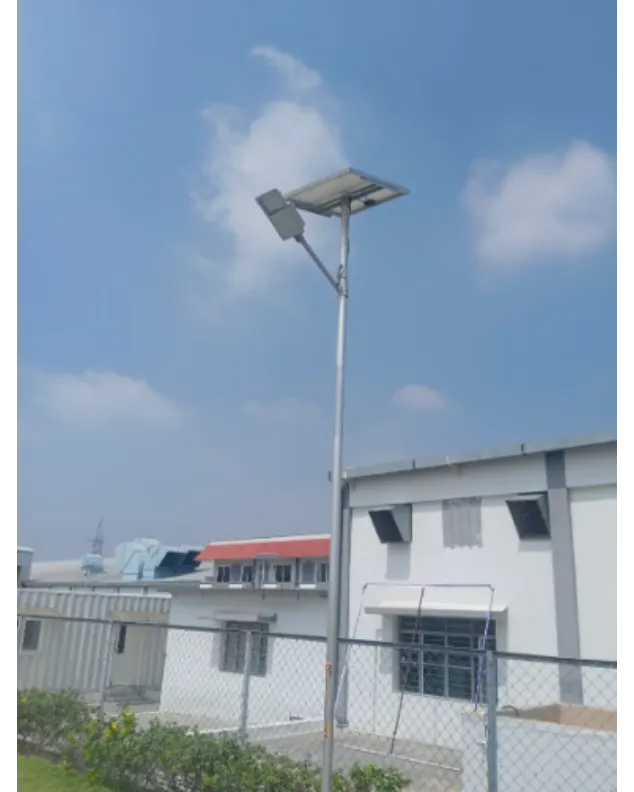
Solar street lighting can be useful where outdoor illumination is required without depending entirely on conventional electrical cabling. It is used for internal roads, residential developments, industrial campuses, institutional grounds, parking areas, pathways, farm approaches, and public spaces.
For buyers in Dindigul, Tamil Nadu, selecting a semi integrated solar street light requires more than comparing LED wattage. Lighting requirement, battery capacity, solar module sizing, pole arrangement, controls, autonomy, and site conditions all influence real-world performance.
Understand the Semi Integrated Configuration
In a semi integrated solar street light, major system components are arranged in a compact configuration while maintaining a design that may keep certain elements separately positioned compared with a fully integrated all-in-one light.
The exact construction can vary by product.
Buyers should therefore request a clear component layout instead of assuming every semi integrated model follows the same design.
Define the Area That Needs Illumination
Begin with the lighting application.
A factory entrance, internal residential road, pedestrian pathway, parking area, and village road do not require identical lighting.
Consider:
- Road or pathway width
- Pole spacing
- Mounting height
- Required illumination level
- Operating hours
- Pedestrian or vehicle activity
- Surrounding ambient light
- Safety requirements
This information helps determine an appropriate lighting layout.
Do Not Select by LED Wattage Alone
A higher wattage number does not automatically produce a better street-lighting system.
Lighting performance is influenced by luminaire efficiency, optical distribution, mounting height, pole spacing, and the area being illuminated.
Two lights with similar wattage may produce noticeably different lighting patterns.
A project should therefore be evaluated using the required illumination outcome rather than a single product specification.
Examine Battery Capacity and Technology
The battery stores solar-generated energy for nighttime operation.
Its capacity should correspond with operating hours, LED load, system design, charging conditions, and required autonomy.
Ask where the battery is located, what technology is used, what operating conditions are recommended, and what warranty applies.
Battery replacement should also be considered as part of lifecycle planning.
Check Solar Module Sizing
The photovoltaic module must collect enough energy under expected conditions to support system operation.
Shading can significantly affect charging.
Trees, buildings, signboards, utility infrastructure, and future construction should therefore be considered before selecting pole positions.
A location that receives sunlight at midday may still experience substantial morning or afternoon shading.
Understand the Lighting Controls
Solar street lights may use automated controls for dusk-to-dawn operation and, depending on design, programmed dimming or other energy-management functions.
Procurement teams should understand the proposed operating profile.
If full brightness is required for particular hours and reduced output is acceptable later at night, that requirement should be defined before product selection.
Consider Weather and Installation Conditions
Outdoor lighting equipment must operate in changing environmental conditions.
Pole foundations, structural stability, enclosure protection, cable management, solar module mounting, and component durability should correspond with the project site.
For Dindigul installations, local terrain, wind exposure, road conditions, surrounding vegetation, and maintenance access can all affect project planning.
Evaluate the Supplier as Well as the Product
Government buyers, institutions, industrial facilities, developers, and B2B procurement teams should compare more than unit price.
Review technical specifications, component warranties, lighting design, installation scope, pole specifications, battery details, solar module capacity, controls, service requirements, and replacement support.
Orbit Solar India Pvt Ltd manufactures renewable energy solutions that include solar lighting systems for different applications.
A technically suitable street-lighting project should begin with a site survey and lighting requirement rather than a predetermined wattage. When illumination needs, pole positions, solar availability, battery capacity, operating hours, and maintenance requirements are assessed together, buyers can select a semi integrated system based on how it will perform at the actual site rather than how attractive its individual specifications appear.
Keywords